
A Modular Revolution in Biomanufacturing
SPONSORED CONTENT: As CDMOs face increasing demand for agility and resilience, Azam Razzaq from FUJIFILM Biotechnologies reveals how the expanded Borealis facility is helping to bridge the gap between clinical supply and commercial reality for sponsors.
“The GMP manufacturing landscape for the production of modern biologics is shifting and CDMOs now have to be able to differentiate themselves in the market to maintain a competitive edge,” remarks Azam Razzaq, Senior Director of Bioprocess Strategy and Development at FUJIFILM Biotechnologies. Fujifilm prides itself on being an indispensable support for its customers and its newly expanded Borealis facility, which was unveiled in February 2026 (1), is helping to further differentiate the company from the rest of the market.
A New Cog in the Machine
“With Borealis, we now have a new cog in the machine that can help us gear up and consolidate Fujifilm’s philosophy as partners for life,” Razzaq continues. “Borealis is our new single-use biologics manufacturing facility that caters for clients in the early stages of their commercial journeys that require flexible amounts of small- or medium-scale GMP manufacturing supply.”
The recently expanded modular, multimodal facility can be adapted to meet the varying requirements of customer’s programs, Razzaq notes. “Borealis is capable of manufacturing mammalian antibody products at scales between 2,000 and 5,000 L using single-use bioreactors, and these can be run in either batch mode or perfusion mode, which is important for continuous manufacturing,” he says.
“Borealis also runs downstream using state-of-the-art single-use equipment, such as SymphonX™, and these can be run in traditional batch mode or, more importantly, they can now be run in connected or continuous modes — MaruX™,” Razzaq states.
Given the fact that traditional batch processing requires discrete steps that must be completed sequentially, leading to reduced production efficiency, there is an increasing demand from industry for continuous manufacturing, Razzaq explains. “So, at Fujifilm, we’ve spent the past decade preparing for continuous operation capability by defining our single strategy, designing modular facilities using KojoX™, and using innovating new solutions like SymphonX,” he says. “Together, these capabilities put FUJIFILM Biotechnologies ahead of the curve in terms of being able to deliver continuous GMP processes for our customers.”
A Variety of Scaling Capabilities
Additionally, FUJIFILM Biotechnologies offers a variety of scaling capabilities to ensure it can meet customer demands throughout the clinical journey, Razzaq reveals. “We can scale up in the traditional sense from bench to 5,000 L microbial or 20,000 L mammalian in our stainless-steel facilities, which is a perfect fit for our customers,” he continues. “We can also scale down as products reach the end of the lifecycle and commercial supply has to wind down in line with demand, ensuring capacity and costs remain aligned.”
Furthermore, we can can scale out for customers who are in the middle of a clinical life cycle and need an adaptable facility to meet changing needs, Razzaq remarks. “Borealis can deliver scale out as a multi-lane, multi-suite architecture, which allows many upstream and downstream batches of the same product to be run in parallel under one roof,” he adds.
“A key enabler for continuous operations at FUJIFILM Biotechnologies has been the innovation of the SymphonX system, a single-use disposable format system that is multifunctional, enables advanced buffer management, and most importantly, opens the doorway to true connected and continuous processing, something that we in the industry call scale on,” Razzaq explains. “So, scale on is a true game changer because it allows a change in productivity, not just in production capacity.”
At FUJIFILM Biotechnologies, scale on is used in two ways, Razzaq reveals. “The first way is where we link multiple SymphonX systems together in downstream unit operations into a connected semi-continuous mode,” he specifies. “So, instead of waiting for sequential batch steps to finish, we can perform multiple cycling steps in parallel to shorten the process duration, which significantly reduces the time on plant. Scale on in this mode can also reduce equipment and consumable scale, and thus, reduce cost of goods for our customers, and then parallel cycling can reduce hold times, which is important for products that may have stability issues during processing.”
The second way FUJIFILM Biotechnologies uses scale on is in fully continuous mode, which is performed at the Borealis facility using the MaruX platform, linking upstream and downstream, Razzaq asserts. “Upstream is performed using a DynaDrive perfusion bioreactor that feeds directly into multi SymphonX downstream, and this provides consistent material flow, which delivers higher productivity,” he states. “So, scaling, it’s no longer about increasing production capacity, it’s about making product supply more agile through connected and continuous operations.”
Building Resilience
Supply chains are currently at an even greater risk of impact from various global events, such as pandemics and conflicts, Razzaq warns. “As a result, it’s even more important to set up systems that are resilient to these external forces so that we can try and guarantee the supply of medicines to our customers and their patients,” he says.
“So, one way in which Fujifilm builds its resilience into our practices is through our KojoX philosophy,” Razzaq continues. “KojoX is our global standardization approach that harmonizes our equipment and technology and our systems and processes so that our multiple sister sites across the continents follow a singular approach for our clinical programs, thus enabling predictable performance and agile delivery.”
The KojoX approach is standardized across all Fujifilm facilities, such as Borealis, which all have consistent modular blueprints with multi-line layouts, harmonized suite configurations, and unified single-use workflows, Razzaq affirms. “This consistent architecture reduces the complexity of moving programs between modular facilities that have different sites during the product lifecycle,” he says.
“KojoX also mandates a harmonized equipment approach,” Razzaq confirms. “By using the same equipment families, like SymphonX, across the global network, we can qualify these systems once and then leverage our qualification experience and knowledge at other sites with a greatly reduced effort.”
Through this approach, the validation burden is lessened, and facility readiness can be accelerated, Razzaq explains. “Additionally, this approach helps our operators build a deeper expertise because they’re always using the same equipment and interfaces for every process,” he states.
“In terms of process development, KojoX incorporates guardrails that ensure all our processes are developed within defined operating ranges that are aligned to our equipment and facility capabilities,” Razzaq adds. “KojoX also integrates a unified digital backbone across our modular facilities where harmonized control systems make data capture, review, and release much more seamless. So, by incorporating these digital systems into connected and continuous processing formats, we can lay the foundation for higher levels of automation and pave the way for future lights out manufacturing.”
“KojoX ensures that wherever a program is executed at Fujifilm — either in the UK, Europe, U.S. or Japan — it operates as part of one coherent, consistent, and reliable manufacturing ecosystem,” summarizes Razzaq.
Click the video above to view the full interview
Reference
FUJIFILM Biotechnologies. FUJIFJILM Biotechnologies Unveils Biomanufacturing and Process Development Expansion in the United Kingdom. Press Release, Feb. 11, 2026.
About the Speaker
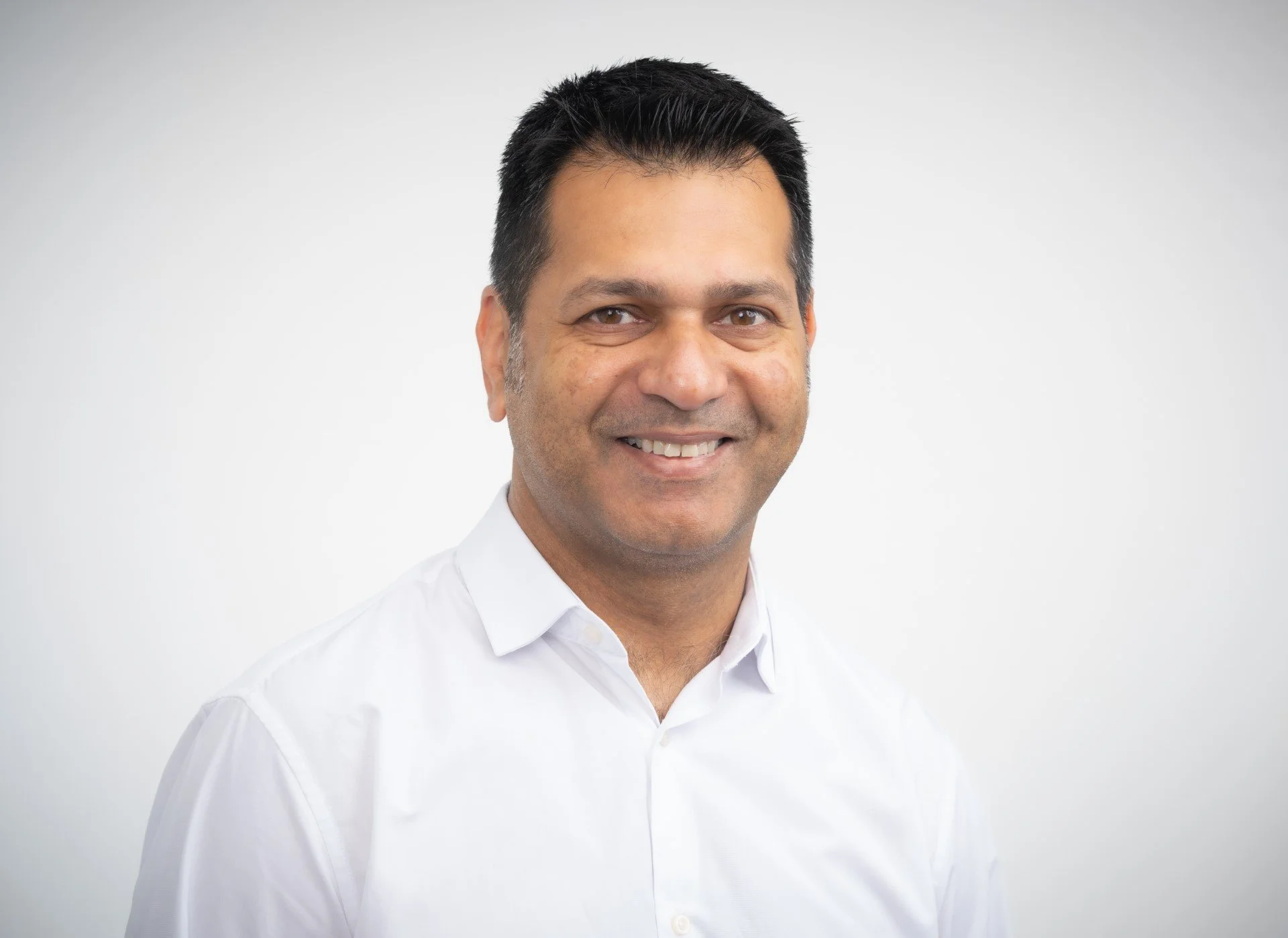
Azam Razzaq is a Senior Director of Bioprocess Strategy and Development at FUJIFILM Biotechnologies. With 20+ years of experience at the company, Azam leads the implementation of innovative bioprocessing technologies by analyzing facility assets, equipment performance, and operational workflows to identify opportunities that accelerate process development and manufacturing timelines.
Prior to this role, Azam has served in multiple other positions within the organisation, managing an early phase microbial manufacturing pipeline, as well as delivering the technical components of client programs for CGMP manufacture of Biologic products. Azam also has 11 years of academic experience spanning several postdoctoral positions in the University of Cambridge, a PhD in Biochemistry and Molecular Biology from the University of York and a BSc in Genetics from The University of Sheffield.
Music from #Uppbeat (free for Creators!):
https://uppbeat.io/t/swoop/blue-sea
License code: ROWDYLORTGQKK3ZY