
Bio/Pharma M&A in the Year of Execution Certainty
With a looming patent cliff, continuing geopolitical pressures, and regionalized supply chains, there is a need for new creative deal structures and alternative financing to ensure successful M&A momentum.
Now that the latest J.P. Morgan Healthcare Conference has closed its doors and the dust has started to settle on the discussions and sentiments realized from event, the global bio/pharma industry is optimistic for M&A momentum in 2026. However, while there is positivity around the dealmaking table for the near future, there is also a clear indicator that potential deals will also be done in a disciplined manner and will include assets that are execution ready.
To find out more about the prospects for the bio/pharma M&A landscape in 2026 and beyond, The Pharma Navigator sat down with a panel of experts, which comprised: Dr. Lubor Gaal, Chief Financial Officer and Head of Business Development at Circio Holding, and Chief Business Officer at MitoRx; Megha Sinha, Managing Partner and CEO of Kamet Consulting Group; and Ali Pashazadeh, Founder, Chairman, and CEO of Treehill Partners.
Click above to view the full video panel discussion or read on for more…
Key Trends for 2026
TPN: What do you expect will be key trends shaping M&A activity for the bio/pharma industry in 2026?
Gaal (Circio/MitoRx): Generally, I expect there will be a continuation of the trends from 2025, I don't believe that 2026 will be totally different. There will probably be smaller ‘bolt-on’ acquisitions by pharma companies, and I don't expect that we're going to see any kind of mega-merger or huge deals. So, I think it will be a more continuation of 2025.
Sinha (Kamet Consulting): The recent J.P. Morgan Healthcare Conference 2026, really reinforced that we're entering a year where deal momentum is back, but the market is still seeking more discipline rather than taking an ‘anything goes’ approach.
The themes that I heard consistently during the conference were: pipeline urgency; platform value; and execution certainty. These themes indicate that buyers want assets that can actually scale and they want the confidence that they can actually integrate these assets into their current portfolio.
So, I really expect three deal patterns to emerge or dominate in 2026. Firstly, it will be the mid-sized strategic acquisition, so not necessarily the mega-mergers, but deals that fill very specific portfolio gaps. Second, we will see increased focus on AI-enabled discovery and clinical development efficiency, because the acquirers really want speed and cost leverage — deals such as those between Lilly and Chai Discovery, Lily and Nvidia, GSK and Noetik, and Cerebras and OpenAI, show buyers that they are really paying for time to market and profitability of success, not just for the molecule. Third, more hard value assets, so obesity and metabolic health will continue, but women's health, immunology, and inflammation signals were also stronger across conversations.
Overall, 2026 looks like a strong year for transactions, but with a sharper emphasis on integration reality, and time to value, not just strategic storytelling.
Pashazadeh (Treehill Partners): So, this year’s J.P. Morgan Healthcare Conference was going to be a wildcard, it was going to be hard to predict exactly what was going to happen and which direction it was going to go in. If you looked at Jefferies in November of last year, it kind of seemed a bit more of the same as what you'd expect: M&A will continue; large-cap pharmas will still look for assets; there will be a large contingency from China and high-value deals; and large-cap pharma will probably readjust portfolios, given all the changes that have been globally. All of that was predicted at Jefferies, and I don't think in J.P. Morgan that was any different.
I think, however, to characterize J.P. Morgan as that would be superficial and we'll be missing the underlying trend that came out of the conference. So, the underlying trend that will lead to very different types of M&A is the ownership point. So, at Jefferies in November, the story from CEOs was: ‘If the market comes back, the story I'm telling you, will lead to an M&A,’ or ‘if the market comes back, I find myself a licensing partner.’ Whereas, at J.P. Morgan in January, there was no further reliance on the market or the industry to change, but ownership that the company was going to do a transaction, because this was the right thing to do, and CEOs were going to look at creative structures in order of getting a transaction done.
Therefore, I don't think history will be helpful in predicting the future. I think we're going to see a lot of very creative deals, we're going to see activity continuing from China, we're going to see a significant shift in the way investors invest in companies, and that's going to lead to I think a very different trend in M&A in 2026/2027 compared with 2025.
Stabilizing Interest Rates and Negotiation Leverage
TPN: Could stabilizing interest rates provide smaller innovators with greater leverage in deal negotiations?
Sinha (Kamet Consulting): Absolutely, a stabilizing interest rate generally improves the financing environment, which helps smaller innovators in two ways: One, it improves the risk appetite for buyers and investors — when the cost of capital is less volatile, acquirers can underwrite deals more confidently and you often see business development teams move faster, which supports better negotiating posture for quality assets; Two, it improves optionality — so, a strong biotech with clean data can credibly say that we can either raise money, or we can partner, or we can sell, and that optionality is where the leverage really will come from.
That being said, this sort of leverage won't be universal, it will concentrate in companies with either clear clinical differentiation, strong biomarker and regulatory path clarity, are assets that really plug directly into a buyer's near-term revenue gap. So, yes, the interest rate environment always helps. But the best leverage still comes from being de-risked and strategically essential, not just from macro trends.
Pashazadeh (Treehill Partners): I think that the thing that will change the landscape, in addition to the interest rates and the macro financial environment, is that smaller players, typically, will go to a larger player, like an investor, or will go to a large pharma, a bespoke pharma, or a larger biotech, because in addition to capital, they're looking for capabilities. These smaller players are looking for a molecule or a platform to be moved forward based on someone else's expertise and someone else's insight.
In my opinion, what is going to change the dynamic more than anything else this year is that companies have got access to TPP [target product profile] creation, CDP [clinical development plan] outlining, and CDP formation, at a far lower cost than they did a number of years ago. So, for example, TPP creation now is being offered to us for free, without any sort of commitment, which helps a smaller player negotiate a better deal, because they're more informed about what their asset is worth, where it's going to end up on the market, what they need to do, and how much money they need to get there.
So, I think that prior opacity is beginning to go away and these smaller players are being empowered by being able to get access to that insight through AI. I think that's what's going to change the dynamics in 2026 and 2027, more than anything else.
Gaal (Circio/MitoRx): I'm not so convinced that smaller innovators will gain leverage in deal negotiations because of stabilizing interest rates. I think what is much more prevalent for a biotech company is access to capital, so, for example, whether they can access alternative sources of financing. As we all know, the financing market or environment for biotech companies is difficult. Having said that, the two companies that I work with managed to raise money late last year, offering more negotiation power going forward when talking to pharma companies. However, most companies still struggle to get sufficient funding for their operations, and of course, that puts them in a much weaker position when negotiating with a pharma company, because they’re much more dependent on successfully completing a deal.
So, I don't think that the leverage has moved towards the biotech companies in terms of negotiations, unless, of course, they have a super-hot asset, like we saw last year with GLP-1s, then that's a different story! But, for most biotech companies, they are still in a difficult position financially, which weakens negotiation power.
Pressure from Policies
TPN: How might regional resilience as a result of geopolitical shifts impact M&A activity moving forward?
Pashazadeh (Treehill Partners): Thinking about the BIOSECURE Act, it's the right thing to do to protect national security and every country should be seeking to do so. If you then think of drug development in the context of that, it falls into two simple categories — military related or not military related.
If the act is military-related, it's not to be questioned. The interpretation of the BIOSECURE Act and other similar acts takes the security element and adds other dynamics to it, which are beyond it just being military related. Therefore, if you speak to a lawyer, they will talk about the BIOSECURE Act in a way that helps them get business. From a drug developer perspective, the act helps them protect themselves from competition, and if you then think of it through the eyes of Chinese companies or Korean companies, they are learning to navigate it as well.
When we talk about BIOSECURE Act, if you read the document, it actually has a relatively narrow area of focus. If you think about the implementation of the act, we as humans have added a lot of flavor to it either side — everyone's definition has implications that are actually very different. Now, what we're seeing is two components to this — one group is companies who were outside of the U.S. considering whether the U.S. is still the place they want to go to, or whether there is now too much headwind and they should think of other areas. And then the other group believes that the act doesn’t relate to them as they are not military-related, and, as such, their anti-infective or oncology drug shouldn't fall within the remit of the act.
So, it's interesting, BIOSECURE is talked about in almost every meeting, but if you then put all those people in a room, they're talking about completely different things.
Gaal (Ciricio/MitoRx): A lot of these policies have much more impact on pharma companies who have manufacturing operations, or are selling drugs in different regions, and they are under much more pressure than biotech companies, who are just researching drugs. Obviously, I'm not sitting in the boardrooms of Big Pharma companies, but clearly these companies have a strong interest in improving their commercial situation, and will act accordingly, and if a regional M&A will fulfill that purpose, then, of course, they may take that approach.
However, pharma companies don't necessarily want to acquire things unless they absolutely have to, so there needs to be really good reasoning for an acquisition. But, as is becoming apparent, people and companies are adjusting to the new realities and the new requirements that the market demands.
Sinha (Kamet Consulting): The BIOSECURE Act has really moved from a headline risk, so this ‘could’ happen, to now be an operational risk. With the updated BIOSECURE Act, that has been enacted through the FY26, NDAA companies using certain overseas biotech providers in federal contract grants, or downstream funding structures really face new restrictions and due diligence pressure. In practical terms, that drives two big M&A impacts in 2026.
First, it increases the value of regional control, so U.S.-EU-based manufacturing capability, qualified supplier, and clean chain of custody, become strategic assets. Second, it makes diligence much deeper, so buyers will scrutinize CDMO exposure, any lab dependencies, biologic supply input, and even research partnerships, because compliance and continuity now will affect valuation of a company.
So, yes, resilience is no longer just really a supply chain strategy, it is becoming a key driver on who gets bought, at what price, and how fast they can integrate without disruption.
Pivoting Away from GLP-1s?
TPN: Will there be a pivot away from GLP-1s to deal activity focused on other therapeutic areas?
Gaal (Circio/MitoRx): I’m not sure we're going to see a large pivot happening and, as I said before, pharma companies generally prefer licensing over M&A, which is only done when it's absolutely necessary. Of course, biotech companies have the power in negotiations when they have an extremely desirable asset, which is then only available to others through an acquisition. That means there's a lot of pressure on the pharma companies to have such an asset on board. I think that dynamic was clearly visible in the GLP-1 space. Where you had the two leading companies, Lilly and Novo Nordisk at the front and other companies trying to catch up.
In my mind, I see a lot of parallels here to another therapeutic market that was very hot 10 years ago — the PD-1 market. BMS was out first in that field, then Merck came and overtook BMS in terms of sales, and a lot of companies did a lot of deals to catch up with the two companies in the front. The same thing is happening, or has happened now, in the GLP-1 space. Has this game ended? Have all these players made their bets and acquired all the programs they need? While I don’t know the answer to those questions for sure, I would think there’s going to be less activity going forward in the GLP-1 space, but I doubt it will go down to zero.
As for other therapeutic areas, I don't think that there will be another hot therapeutic area quite like GLP-1 or one that will manage to take the place of GLP-1. And, just because people or companies have done deals in the GLP-1 space doesn't mean they haven't done deals for other therapeutic areas.
However, I don't foresee another area becoming as hot as GLP-1, which is still considered to be one of the biggest pharmaceutical markets in the history of the industry. Additionally, only a fraction of potential patients have been treated with GLP-1s, and as most patients have not been treated at all there's a still a very big market out there.
Sinha (Kamet Consulting): Considering all the trends, I would say we will see some pivot, but I wouldn't call it a pullback, it will be more like a broadening. Obesity and metabolic remain structurally important because they really connect to cardiovascular disease, liver disease, renal outcomes, and really broader chronic care economics.
However, what really changes in 2026 is where investors and acquirers hunt for the next durable growth engine. So, I expect more attention on oncology with smarter targeting and combinations, immunology and inflammation of women's health — which was a big topic at J.P. Morgan, and also in Davos — and modalities where platform advantage matters, such as cell therapy manufacturing efficiency, RNA, and targeted biologics.
Really importantly, deal logic will shift toward commercial and access reality not just science. Pricing and reimbursement pressure is becoming louder globally, which will shape what assets are truly scalable. So, yes, you will see a pivot, but it's more like a diversification of the deal flow than just a sudden exit from GLP-1.
Pashazadeh (Treehill Partners): With the GLP-1s, the difference between Q4 of last year and Q1 is very different, in the sense of we saw a reduction of price to 30% of the drugs. So, the value proposition of the GLP-1 significantly changed in an incredibly short timeframe, based on dynamics that was outside of the industry. Therefore, a lot of companies have been focusing on oral GLP-1s as the next generation, and whether peptides or small molecules, these have a very different value proposition today than they did do at the end of last year.
As a result, GLP-1s wasn't really a topic like you'd expect because that huge fat tail that would have been there if the injectables were still there has gone and the market starts to genericize. All of a sudden, five to six years have been taken out of the market curve, and there is not the massive volume that was previously there, because of the cost reduction of orals versus injectables.
During J.P. Morgan, we had a lot of conversations on ADCs, we had a lot of conversations on bi-/trispecifics, but it's actually very hard to predict what is the next hot area. For example, starting with a Korean company that essentially helps Korean companies license has 396 assets in their portfolio; however, comparatively speaking a much bigger company, like WuXi, has 800 molecules in development, meaning that it's very hard to say what might be a breakthrough technology, just given the volume of molecules that are there, and which one is differentiated enough to really be clinically relevant.
Impact of the Patent Cliff
TPN: In light of the looming patent cliff, do you anticipate a continuation of ‘bolt-on’ deals or will companies take on riskier, larger deals?
Sinha (Kamet Consulting): I do think that the patent cliff will push the strategy for acquisitions forward, but the response won't be that one-size-fits-all. The industry is really staring at a meaningful loss of exclusivity cycle across 2026 to 2029 and that is the real catalyst for deal intensity.
What I expect is really a barbell strategy. So, on one side, it will be continued bolt-ons for targeted capability — a specific asset, a specific platform, or even a geographic footprint. And on the other side, select companies will really do bigger moves when they need revenue replacement or want to reshape a franchise.
However, the bigger deals, only will work when the integration is executable. So, in 2026, the winners won't just buy innovation, they will buy assets where they can manufacture it, register it, supply it, label it, and really scale it globally without getting stuck in that multi-year complexity. Thus, patent cliffs do raise deal urgency, but the market will still reward precision and integration certainty and not just size.
Pashazadeh (Treehill Partners): The interesting thing with patent cliffs is that they are predictable, but their predictability can be dependent upon how close we get to the edge of the cliff. An underlying driver of our conversations at J.P. Morgan was around how to navigate around the patent cliffs — so, using an innovative deal structure, alternate financing, changing the nature of assets you bring in, or changing the quality threshold that is acceptable. I think the conclusion of that is, there will be a lot more deal activity.
It’s not just the patent cliff, by the way, there are three main factors that are changing things: One is the patent cliff; Two, if what's happened to GLP-1s, happens across other areas, you're losing that stable cash flow the large cap pharma is reliant on; Third, which is even more relevant in my mind, and compounding the issue, is that 66% of biologics don't have a biosimilar against them at the moment.
Further, if you consider that the requirement for Phase III studies is now removed for biosimilars, then there will be genericization. Add on top of that the favored Nation pricing component, that might overlap with the GLP-1 bit as well, and those are really the three main drivers that means a large-cap pharma will have to look at how long it has the exclusivity for, when it loses exclusivity, and how long does it take for those products to decay? So, if you take all of that away, large cap pharma starts acting and behaving and thinking more like a specialty pharma, which means the minute I have my patent expiry, I'm going to see quite a steep drop off in price for my product.
Gaal (Circio/MitoRx): Patent cliffs happen quite regularly in our industry. When I was at BMS, we had the same situation, our lead product was at a patent cliff, and we had to compensate for the loss of revenues. It's very rare you can acquire something that replaces the drug coming off patent immediately, you have to invest in the future, and most companies know that, they know exactly know when their patent cliff is, and they know what they need to do in order to minimize that impact on their revenues and definitely on their profits.
There are different things to do to minimize the impact on your earnings per share without having to acquire other companies. Sometimes, I think bolt-on acquisitions can be more effective, especially if they have a good product, and just these big transactions, because, you know, they also take time to digest and make work. So, I think we're still going to see more of the bolt-ons than the mega-mergers, but I could be proven wrong very soon!
Top Three Predictions
TPN: Could you provide us with your top three predictions on what might shape bio/pharma M&A activity in 2026?
Pashazadeh (Treehill Partners): I predict that we're going to see a significant shift in drug development, and we've been talking about this for a number of years, the conversations we have now — which is that I can take a molecule, I can get it developed through Phase I for a million dollars — massively changes the speed at which companies can move forward and can generate data to understand whether they're there.
The second thing with the large pharma patent cliff is, from all the other dynamics we just discussed, I think there's going to be significant appetite in picking up high-quality companies and a lot of those companies won't be prepared for a deal yet. So, it will be interesting to understand that arena.
I think the third thing is, we're seeing very high-value deals coming from China. If you then look at the number of assets that are behind that and given how quickly people are using AI to move things forward, it will be interesting to see how long those valuations stay high. When people don't get a deal done, do they hang out on the market for a bit longer or do they change their expectations? So, it will be quite interesting to see how long we're going to see high-value deals for, and at what point that starts genericizing.
Gaal (Circio/MitoRx): Activity in the GLP-1 space will continue, although it's difficult to predict what other assets are there available that people will pay big bucks for. Maybe people will wake up to the fact that there's a new generation of obesity medicines being developed, MitoRx, is working on such a thing, I think it's the future of obesity, it's a totally different mechanism of action that can go beyond what the GLP-1s can do at this point in time. Um, so maybe this will, but whether that is sufficient to do an M&A or for licensing, that's something to be discussed.
Neuroscience has come back and is definitely an area where there's a lot of interest. Again, my take is always that pharma companies prefer licensing deals for an asset instead of just buying a company outright, so one has to look at what is their maybe late stage that is so tempting that a pharma company would do an M&A for that, so that could actually happen.
And then, I think gene therapy is on the way back. One of the other companies I work for, Circio, we see a big uptick in activity. There is a perception that gene therapy is dead. But that is because people compare it to the heydays of the pandemic, when the valuation of gene therapy companies exploded, and they were worth billions of dollars. But if you look at investing activities and deal-making, even by big companies like Lilly, they invest a lot of money into gene therapy, and not just gene therapy, but also cell therapy, so in vivo CAR-T has become quite hot. There was an acquisition by AbbVie of Capstan Therapeutics in 2025 at an early stage. So, another area that could actually become quite hot is in vivo CAR-T, and that could actually lead to some additional acquisitions.
Sinha (Kamet Consulting): Firstly, resilience becomes a valuation lever — the BIOSECURE Act and geopolitics turn supply chain and vendor dependency into a diligence centerpiece, so, a clean, regionalized capability, really trade at a premium.
Secondly, really the most attractive deals will be execution-ready. So, buyers will pay for assets that can scale with fewer regulatory and manufacturing surprises and speed to value will matter much, much more, or as much as science.
Thirdly, AI and data-driven development becomes a repeatable deal thesis, it's not just hype, we already saw that in J.P. Morgan, but really a measurable compression of timelines, trial design efficiency, and smarter decision-making across the lifecycle.
So, bottom line, really, 2026 is shaping up to be a year of high deal intent, but the winners really will be those who treat M&A like an operational system, or an operating model, not just a transaction.
About the Panellists
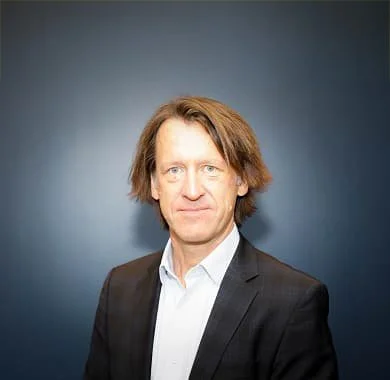
Dr. Lubor Gaal is Chief Financial Officer and Chief Business Officer at Circio Holding — a biotechnology company developing novel circular RNA and immunotherapy medicines — and is the Chief Business Officer of MitoRx — a preclinical stage biotechnology company, developing first-in-class mitochondrial-targeted therapeutics. Lubor brings over 25 years of experience in the pharmaceutical and biotechnology industry to his roles and has previously worked in senior business development positions at Bayer, Bristol Myers-Squibb, and Almirall.

Megha Sinha is CEO of Kamet Consulting Group, which supports life sciences teams through high-stakes changes, delivering programs that will create measurable value for our clients by pairing deep regulatory and compliance trigger with cross-functional execution expertise. Megha has 17+ years of experience across industry and consulting, including eight years at PwC where she led global M&A programs focused on regulatory strategy, supply continuity, and operational readiness across global markets. Additionally, during her time at PwC, Megha partnered closely with digital transformation teams to bring practical, technology-enabled solutions to pharmaceutical and medical device clients.
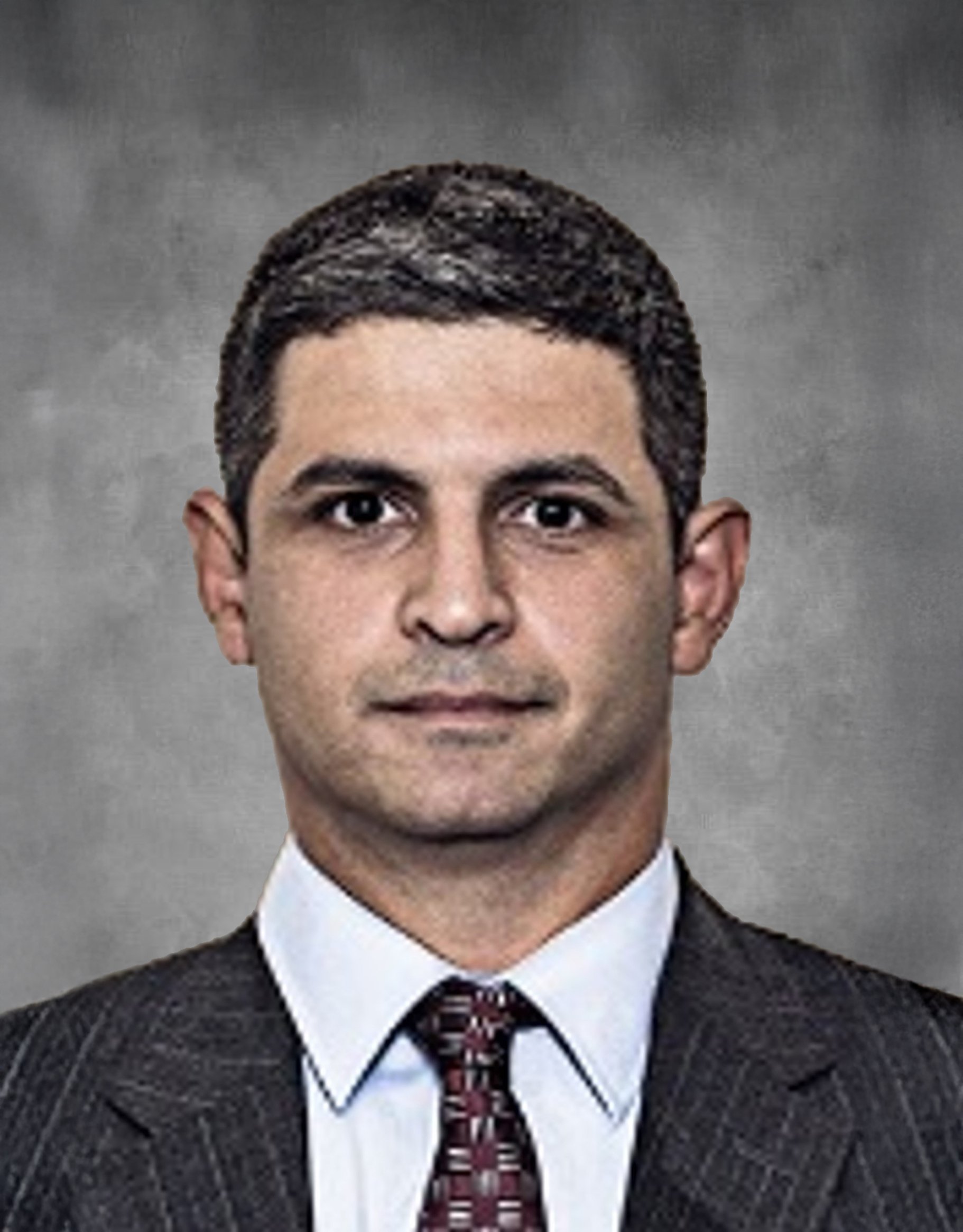
Ali Pashazadeh is the Founder and CEO of Treehill Partners — a global healthcare strategic and transaction advisory firm. Ali has over 30 years of experience within the industry and continues to be an active medical practitioner in the acute care setting. He has over 20 years’ experience in healthcare investment banking, including with Goldman Sachs, UBS, and Blackstone, where his role involved providing advice to companies and boards on large and complex strategic transactions. Ali also serves in a leadership role on numerous philanthropic efforts, is Founder of Amazonas Protect, and Trustee of the Foundation for My door.
Music from #Uppbeat (free for Creators!):
https://uppbeat.io/t/tatami/frisbee
License code: O9DQHCKSKLL6MYMU
Image Credit: © Golden Sikorka - stock.adobe.com