
CPHI Milan 2026: Balancing Viscosity, Compliance, and Sustainability in Fill/Finish
Ahead of CPHI Milan 2026, Professor Hanns-Christian Mahler from ten23 health, explores how expanding dose volumes, flexible CDMO partnerships, and steadfast sustainability commitments are reshaping modern bioprocessing.
As biopharma pipelines increasingly feature complex molecules, the risk of technical bottlenecks at early development stages continues to grow. According to Professor Hanns-Christian Mahler, CEO of ten23 health, many of these challenges originate during initial drug substance design rather than downstream fill/finish processing.
“Trouble starts on the development side,” Mahler notes. “Many of the formulations that are developed are probably not necessarily done so with manufacturing in mind or with the drug product requirements in mind. They're put maybe together at the drug substance side — thinking about the everything from a more analytical perspective — and that's why I think the trouble may start with the formulation.”
A prominent challenge for complex molecules involves balancing dosage concentration with administration volume, particularly for the high-dose subcutaneous therapies that will be delivered via auto-injectors or wearable delivery devices, Mahler remarks. Rather than forcing ultra-high concentrations into standard containers, drug developers are increasingly adopting flexible platform approaches, he reveals.
“The days where everyone was targeting a 150-centipoise formulation are thankfully over, because you can actually leverage that higher volume now, yet all these solutions require different manufacturing supply chain solutions,” Mahler explains. Usually, the conversation with sponsors needs to work around different options, because the dose is not known at the early development stages, so, the aim is to just get the formulation in a reasonable viscosity and concentration, ensure the stability is there, and then the manufacturing can be figured out later, he adds.
To accommodate these varied options, specialized CDMOs need to be flexible in their offerings, Mahler notes. “We can manufacture anything from a 1 mL syringe to a 10 mL cartridge,” he specifies, “so, we can bridge that dosing of between 20 mg and 2 g of antibody.”
However, requests from sponsors can differ vastly and sometimes there can be a need to squeeze existing formulations into lower volumes and so forth, Mahler reveals. “From a market perspective, that’s what we’re seeing happening and I think the whole design space of volume and viscosity and concentrations is going to broaden up much more, which will probably mean that CDMOs need to think more about optionality and flexibility,” he says.
Additionally, the need for adaptable CDMO frameworks is further increased as a result of the capital constraints and fluid clinical timelines facing early-stage biotechs. Although, Mahler stresses that operational flexibility can never come at the expense of regulatory compliance or product safety.
“First of all, I think priority needs to be focused on GMP first and Annex 1 compliance," Mahler asserts. “We have had customers coming to us asking, 'Can you skip the PUPSIT?' because basically it's something where we can save material, but you can't compromise on your GMP and quality considerations.”
To maintain flexibility while protecting GMP integrity, integrated service offerings — combining formulation development, fill/finish, and quality control under a single roof — provide a key advantage, Mahler specifies. “If a biotech is working with us on the formulation development of product definition, that makes it obviously more flexible and simple,” he says. “You have like many months before you go to manufacturing. That already builds a little bit more flexibility in, and you can juggle around with a fill maybe differently than when you are trying to contract a different partner for every single step.”
For larger corporate partners, portfolio agreements offer another layer of agility, allowing companies to pivot different pipeline molecules back and forth across reserved manufacturing slots throughout the year, Mahler confirms.
Sustainability is an increasing industry concern and while it is a critical consideration for ten23 health — which has recently achieved further Scope 1 and Scope 2 emission reductions — improved practices are only gaining mixed momentum across the broader market, Mahler observes. “The climate crisis has arrived, yet I think it kind of dropped from the attention of many boardrooms as well with maybe other geopolitical discussions and considerations,” Mahler states. “With many people, it has become an afterthought. Yet it's great to see that there's companies out there that keep it as a focus topic, yet I wish there would be much more.”
Mahler emphasizes that environmental commitments should remain a principled baseline rather than a transient business trend. “We still think it's the right thing to do and not just because everyone is asking for it,” he remarks. “I think it's a role that companies need to play — to think about what's right and not only what is the next best trend.”
Click the video above to view the full interview
ten23 health can be found in Hall 8 Booth #J69 at CPHI Milan.
About the Speaker
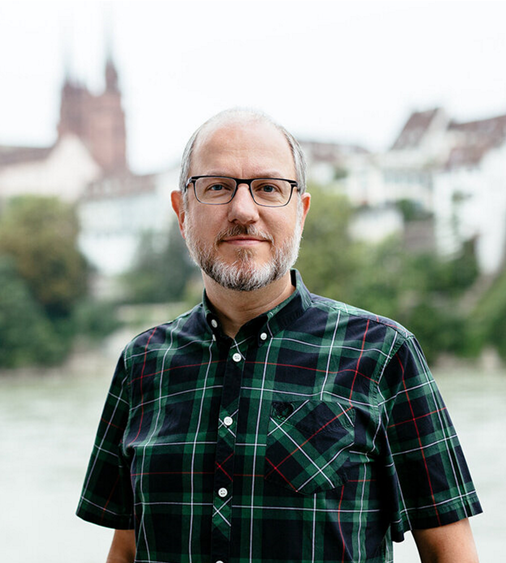
Professor Hanns-Christian Mahler, PhD, is Chief Enablement Officer and Board Member at ten23 health. He previously led the Drug Product Services Business Unit at Lonza AG (Basel, Switzerland) (2015–2021) and worked in various leadership roles, such as Head of Pharmaceutical Development & Supplies at Roche (2005–2015) and Merck KGaA (2000–2005). He has extensive expertise in formulation development, process development and validation, packaging/device development and integration, sterile manufacturing and regulatory submissions with numerous IND/IMPD and BLAs.
Professor Mahler studied pharmacy at the University of Mainz, Germany, and holds a PhD in toxicology from the Institute of Pharmacy, University of Mainz, and pharmacist specialisation degrees in toxicology and ecology, and pharmaceutical technology. He also has qualifications in Business and Marketing (AKAD University, Germany). Professor Mahler obtained his venia legendi from the University of Frankfurt, Germany, in 2010 and is adjunct faculty member and lecturer at the universities of Frankfurt and Basel. He also serves as Editor for Pharmaceutical Research, Journal of Pharmaceutical Sciences, AAPS Open Journal and PDA Journal of Pharmaceutical Sciences and Technology.
Music: 'Air' by Richard Smithson on #Uppbeat
https://uppbeat.io/c/richard-smithson
License code: DPM5FUIYGVAGUPNJ
Image Credit: © bogdandimages - stock.adobe.com