
Putting Clinical Trials Under a Magnifying Glass
Marking Clinical Trial Awareness Day, Treehill Partners’ CEO Ali Pashazadeh details the flaws in clinical study designs and explains how high-velocity competition from Eastern markets is forcing a long-overdue industry redesign.
Stream on your favourite platforms.
Every year on May 20, the world recognizes evidence-based medicine and the volunteers and researchers that make it possible. However, while clinical trials have helped bring forth numerous life-saving therapies, their operational structure is stubbornly stuck in the past.
According to Ali Pashazadeh, Founder, Chairman, and CEO of Treehill Partners — a global healthcare strategic and transaction advisory firm — standard approaches to clinical trials tend to bypass the fundamental question of whether or not they are the right trials to run. “We published a paper about a year and a half ago that looked at 1,200 clinical studies that had been through a CRO — so, these are Western studies, Phase II, Phase III — and we noted that out of the 1,200 studies that we reviewed, 60% of them didn't have a rationale for the study moving forward,” he exclaims.
While the trial had launched and was ongoing, the CRO and management had not thought through how the trial might strategically move the drug company forward after completion, Pashazadeh stresses. “In 85% of cases, we noted at least one material error. So, either the comparator or other major design flaws in the study. We noted that in Phase II/III studies where you would have a commercial TPP [target product profile], only 5% of the companies we were talking to had a commercial TPP. If we think of those statistics, they're relatively eyebrow raising,” he says.
This disconnect stems from a fundamental misalignment of incentives within the CRO sector, notes Pashazadeh. Even though CROs are massive and operationally focused, they are not strategic consultants and, thus, they look to execute a protocol as efficiently as possible rather than questioning whether or not the study is right for the project, he remarks.
“The other thing here which is interesting is the CRO industry has historically been backward-facing. So, they will look at all of the [previous] studies that have been run and, using what is publicly available, that's how the next study is designed,” Pashazadeh asserts. “If we think of science and the fact that it is forward-facing and innovative, it's interesting that the study design and the reliance on data is historic. Therefore, there's a massive dislocation in terms of the studies that are designed that are going to be relevant going forward.”
Furthermore, the CRO sales force are incentivized on a quarter-by-quarter basis, meaning that if a study is flawed there is no motivation for the CRO to halt a project to perform a redesign, Pashazadeh explains. As CROs are operational delivery companies not strategic advisors, the incentives are not aligned.
Compounding these internal flaws is a shifting geopolitical landscape, where cumbersome Western models are increasingly being challenged by high-velocity emerging markets in Asia. Pashazadeh points out that Eastern players aren't inherently superior; rather, a lack of market competition over the last few decades has left Western companies complacent and slow.
Bolstered by top-tier, Western-educated talent returning home, companies in China and South Korea are operating with unprecedented efficiency, bringing assets to the Investigational New Drug (IND) stage much faster and at a fraction of the cost. “The emergence of competition has woken up a lot of people,” Pashazadeh notes.
This cross-border dynamic is sparking a seismic shift in how major pharmaceutical companies forge strategic alliances. Landmark collaborations, such as the licensing agreement between Bristol Myers Squibb (BMS) and Chinese giant Hengrui, or Roche’s massive billion-dollar push into South Korea's biotech ecosystem, showcase an industry moving toward a level playing field where geographic origin is irrelevant to drug quality.
If traditional Western service providers and CROs refuse to evolve, this borderless efficiency could prove to be a terminal bottleneck. “For CROs, it could be the checkmate move where a lot of these companies providing services... will no longer be there,” Pashazadeh warns.
“In terms of the quality of clinical study design, there is a significant area for improvement, which is why we've been working with CROs to serve clients better,” Pashazadeh summarizes. “So, I think there's a there's a long way to go in terms of improving the quality of service that clients can receive.”
Click above to listen to the full conversation in the latest episode of All Points of the Pharma Compass.
About the Interviewee
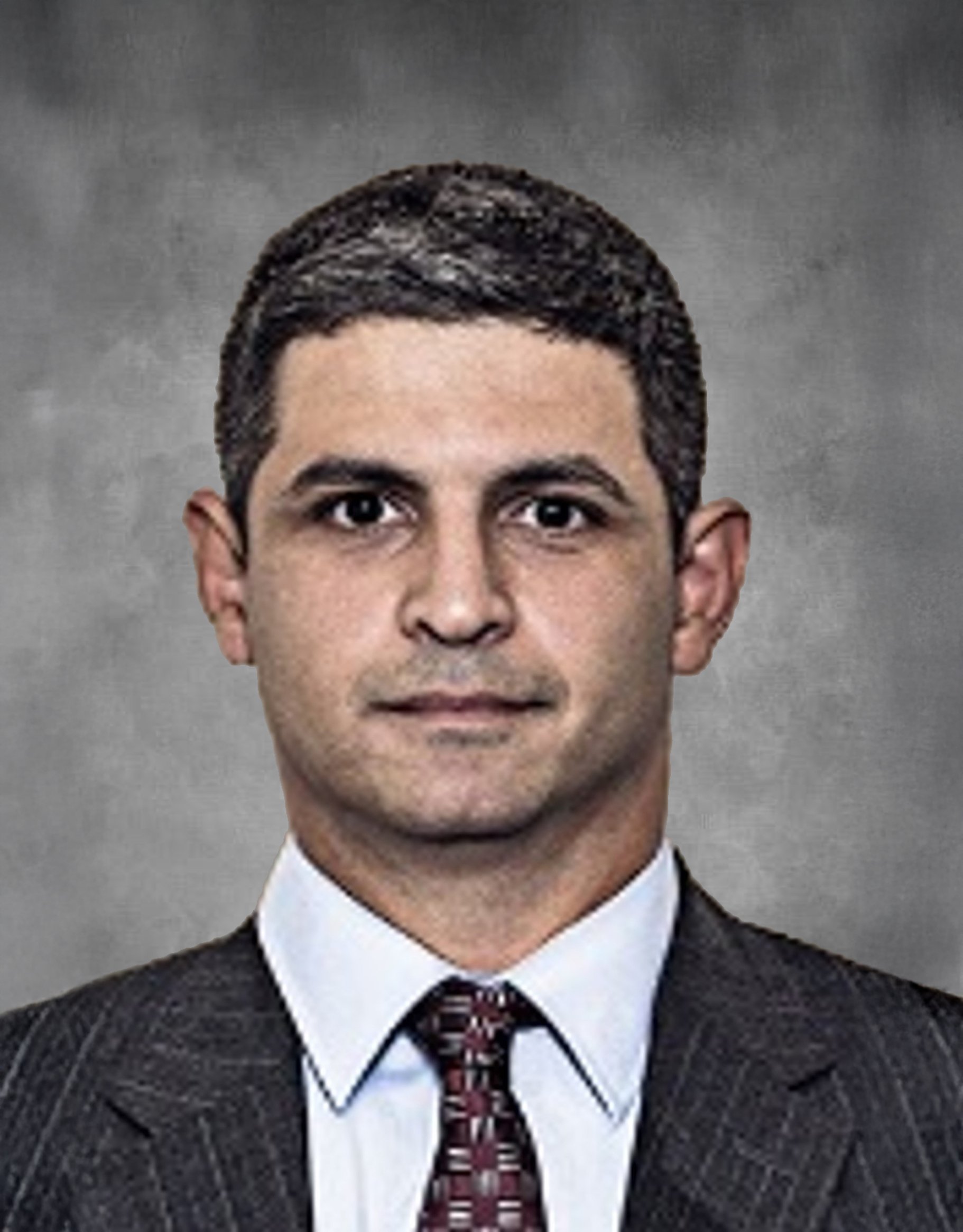
Ali Pashazadeh is the Founder, Chairman, and CEO of Treehill Partners — a global healthcare strategic and transaction advisory firm. Ali has over 30 years of experience within the industry and continues to be an active medical practitioner in the acute care setting. He has over 20 years’ experience in healthcare investment banking, including with Goldman Sachs, UBS, and Blackstone, where his role involved providing advice to companies and boards on large and complex strategic transactions. Ali also serves in a leadership role on numerous philanthropic efforts, is Founder of Amazonas Protect, and Trustee of the Foundation for My door.
Music from #Uppbeat (free for Creators!):
https://uppbeat.io/t/roo-walker/over-the-horizon
License code: DF1V6OVKVEQSFIAI
Image Credit: © alesmunt - stock.adobe.com