
The Delicate Balance Between Innovation and Execution
When approaching their clinical trials, sponsors need to balance the program’s needs with the tools and approaches they want to implement to ensure success, explains György Barta from Research Professionals.
The clinical trial sector is currently experiencing an evolution thanks to various technological and approach innovations that is equivalent to the transition from paper to Electronic Data Capture (EDC) two decades ago. However, in 2026, the challenge facing companies isn't related to the availability of technology, it's the prospective cost of implementation.
While wearables, artificial intelligence (AI), and decentralized clinical trial (DCT) models promise better patient access and retention, they often arrive with a price tag that many sponsors struggle to justify. To learn more about how companies can ‘chart the best course’ to find the delicate balance between innovation and execution in the clinical trial sector, The Pharma Navigator spoke with György Barta, Clinical Operations Director and Managing Partner at Research Professionals — a CRO based in Hungary.
Click above to watch the inaugural episode of Charting the Best Course — a video interview series with executives and senior level experts — or read on for more…
An Innovation Evolution
TPN: Industry has seen an evolution in terms of innovations over recent years, but what sorts of innovations have shaped the clinical trial sector?
Barta: I think, to properly delve into this question, it would be worthwhile to first look at the past. I remember when I started as a CRA [clinical research associate] 20 years ago, basically everything was paper-based, we mailed CRF [case report forms] pages to data management for double entry — it had to be completed with a black ballpoint pen — and we had to fax query responses to data management or discharge summaries to the pharmacovigilance department. Additionally, as a CRA, we didn't have mobile internet when we went to sites! So, if you were on a monitoring visit, all you could do is set an ‘out of office’ stating that you would not be able to respond to emails.
Gradually, the EDC was introduced, which was a big change in the industry around 20 years ago. Then, when we got mobile internet, it was another step forward so we could carry our laptop to the monitoring visits and be online all the time. I think we are experiencing similar changes right now with AI and wearables. So, it's a big step for the industry right now.
Similarly, we had the introduction of IVRS [interactive voice response system] in the past, which maybe newer CRAs don't even know about nowadays. IVRS was where you had to dial a number and navigate through the menus to allocate investigational product to the subjects. But now these systems work mostly in an integrated EDC or sort of electronic environment.
So, what was an innovation 20 years ago is now over. It's quite standard now to use smartphones and laptops and tablets, which was not the case in the past, but now, with the current innovations with wearables, we have digital endpoints, we have the option for remote monitoring, and we have real-time access to data and dashboards.
There are new outsourcing models as well, which was not the case 20 years ago when we thought about pharma and CROs, and nothing in between in terms of operating models. So, with all these technology advances, it's a good opportunity for the industry, both the pharma and CRO side to make our work more efficient.
But with every new system introduction, there is still a challenge of how to adapt it, how to build the processes around it. For example, we are experiencing the electronic ISF [investigator site file] more and more nowadays and not many sites are used to it — the electronic TMF [trial master file] was a similar case approximately 10 years ago when no one was very experienced with it and we were not sure how to quality check the uploaded documents or how to find inconsistencies or missing documents, which now we have good reports for. So, I think we have a similar technology leap right now with the wearables and AI, compared with the move from paper to electronic systems.
What could be really challenging is to build in the cost of these systems and processes into the study budget. Currently, I think that these increase costs more than save costs, so, at the end of the day, the client or the sponsor company has to pay for it and the question then becomes whether companies are able to and willing to pay for such innovations or if they need to revert to paper CRFs — which we have experienced in the past few years. So, even when we have the innovation in place and technology available, not every company can use them right now.
Meaningful Decentralization
TPN: How have technological innovations, such as wearables and direct delivery to patients, affected the adoption of DCTs and what benefits does a decentralized approach offer over the traditional clinical trial model?
Barta: Our company has been involved in DCTs since the very beginning, about 10 years ago. What we were doing back then was more of a hybrid trial, so not a fully decentralized trial where everything happens remotely, but where some patient visits happen at the clinical site and some happen in the patient's home or school or workplace, so remotely from the site. I think this hybrid approach demonstrated clear value — it improved patient access, so many patients who live far from a clinical site could more easily participate in the trials, we had the option to reduce unnecessary site visits by replacing them with remote calls or visits by a nurse, healthcare professional, or mobile clinician, and we increased participant retention.
A good example was when we had a pediatric rare disease trial where there was a combination of site visits and home visits. [In this instance, the home visits] reduced the time being taken off work and school because the visits could be performed in the afternoon, the family saved a lot of potential travelling time as they didn't have to go to the site, and didn’t have to stay at the hotel close to the site.
A lot of things can now be done remotely in the patient's home, including ECGs, IP [investigational product] administration, blood sampling; however, it's not a fit for all clinical studies. So, we have to find those studies where it brings value or those visits where it brings the value.
It's important to mention that now we have well-established processes and quality control in place. Compared to the early days, it's well established now how the PI [principal investigator] oversight should be done, how the mobile clinician selection is done with all credentials checked, and there are processes to implement the interaction during the off-site visit, with the clinical site, with the investigators, so have the physician oversight even if a nurse performs the remote visit.
For DTP [direct to patient], that's really a good logistic option, there are some ‘fancy’ data loggers now which can send real-time data from the cold storage box, still unopened, about the temperature and speed and location of the package. So, we can check for temperature excursions real time even during the shipment. That’s really an advancement that was not in place 20 years ago.
It is also important to note that data protection safeguards should be in place because the patient data or participant data should not go to the sponsor directly. There have to be steps built into the process to protect the participants’ personal data.
As you can see, this approach affords options to patients to participate in clinical trials. But, the strength of DCTs or hybrid trials is not really speed, it’s more like operational stability, I would say — allowing trials to run smoothly, even when patients or sites or certain geographies have some constraints.
I think the COVID pandemic was a good example that for our ongoing hybrid trials, we didn't experience issues because we were prepared for certain scenarios and could work remotely. But studies that were running via the traditional model had to be changed within days or weeks.
However, I would say that decentralization is not universally appropriate, but because certain assessments still require site infrastructure — you cannot perform a CT or MRI in the patient's home, for example. While many other things, such as blood sampling or IP administration or mobile ECG, can be done in the patient's home, we have to select those studies and visits where it makes sense, when it genuinely strengthens the study conduct. So, we don’t want to decentralize everything, that’s not the goal, but to decentralize what meaningfully improves the execution of the clinical trial.
Potential Accessibility Risk
TPN: Is accessibility a potential issue for DCTs, for example if certain people can’t access high-speed internet or struggle with tech literacy?
Barta: Yeah, there is such a risk. Decentralized trials can either expand or unintentionally restrict access to clinical trials, depending on how they are implemented. So, if decentralization relies exclusively on digital tools, I would say it risks excluding patients with limited connectivity or who have no technical confidence or who are less technology savvy. This can narrow the patient pool and introduce some bias in the study, which we should avoid.
However, I can see that even older generations, are now smartphone users and have internet access, allowing them to participate in such assessments, which may have been a challenge 10 years ago. But, also, there are some technology solutions for connectivity issues, like mobile hotspots, that can be installed or devices can be given to the participants to be able to report their data.
We are seeing more ‘bring your own device’ setups now as many people have their smartphones — even the marginalized populations have smartphones and mobile internet. Also geographically speaking, we can see that almost everyone in the world now has a smartphone and data connectivity is less of an issue.
Our experience shows that the human interaction part should really still be there, or at least in the hybrid trials in our model, what we are thinking and what we have seen working well in practice is that human supported decentralization is key. So, we have home visits by trained mobile clinicians — it could be a research nurse, it could be a physician — who can assist the participants with the consent process, so it doesn't have to be fully remote from the site or from a clinician or a physician. There could also be flexible data capture options, so the mobile nurse can bring a tablet to the participant and complete the assessments there in the tablet and transfer the data right away. So, it's not only technology, but some clinical presence as well, which I think could bring a good balance in implementing DCTs and reduce potential bias — to access populations who wouldn't be accessible in a traditional trial as well.
A Deluge of Data
TPN: With the advent of new technologies and innovative approaches, industry also has to contend with an increase in the volume of data. How do CROs balance the ‘more is better’ approach to data collection with the growing risks of data privacy and the noise of potentially irrelevant endpoints?
Barta: What I'm hearing from industry peers is that the pharmaceutical industry is quite slow in adopting innovations. So, despite the hype or noise around wearables and fully decentralized clinical trials, we see still a slow uptake of all these technologies and methodologies.
Having said that, the volume of data collected per patient is definitely increasing rapidly, as you mentioned, driven by wearables, remote monitoring options, and continuous data capture. In a traditional trial, a patient visited a site every month when researchers would collect some historical data or a paper-based patient diary. Now, we have loads of data coming in to the servers of each different provider.
However, I must say that more data does not automatically mean better data! We have to be careful about what we collect and the biggest risk we see in data collection is that you shouldn't collect data that adds too much burden if it does not improve decision making later on. If due care is not taken there is a chance that data collection will bring burden and additional costs, will affect the participants, the sites, and the operational teams, and may compromise data quality and end up with a loss of focus.
I also think that there is still a risk to collecting a lot of data: it could increase costs, which again is hard to explain to a client, particularly if it's not well justified. So, if we collect data which is not used at the end, it's a waste of money and time.
When I worked in Big Pharma, I saw initiatives where they were focusing on collecting the relevant endpoints and data, and avoiding the collection of ‘nice to have’ data because there is a real cost impact and burden on the participant if you do extra assessments and tests, which, at the end, will not be used.
So, there are initiatives there to somewhat reduce the data being collected and CROs definitely play a critical part in helping sponsors focus on the relevant decision-driving endpoints and designing data flows that remain manageable throughout the study life cycle. CROs have a key role in this aspect.
Definitely, with AI and advanced analytics, the handling of such big data can be easily done and with the introduction of risk-based monitoring, I think this is now where it really makes sense to combine the two options. So, risk-based monitoring and AI, together, can detect trends better and you can visualize the data better, but all these have to happen in a well-defined quality framework.
Making the Right Approach Choice
TPN: In terms of approaches to outsourcing clinical trials, industry seems to be split in their choice between functional service providers, full service CROs, or hybrid models. What, in your opinion, are the primary considerations that a sponsor needs to be mindful of when choosing their approach?
Barta: I would say the choice between functional service providers, full service CROs, hybrid models, or a combination of these approaches should be driven by the suitability, not by whether it's the fashion now to outsource everything or an industry trend to employ functional service providers.
Every company is at a different development stage; they have a different number or lineup of assets and, therefore, the operating model has to be chosen wisely according to these factors (i.e., whether it's a small company or larger company with a lot of development going on). If we consider, the study phase, for example, we have to make decisions that will provide a beneficial effect on scalability, governance, and quality in later phases. For example, if we start in a Phase II with one model, that model may not work the same way in a Phase III study, so, there has to be a sustainable model overall.
The functional service provider model is more apparent in the bigger companies, such as the multinational Big Pharma, where they can adapt their workforce quite flexibly. So, if there is a new candidate molecule that needs many clinical trials or a whole program, they can hire a lot of CRAs, for example, through their functional service providers. Therefore, it's not the sponsor’s energy going into hiring new people, but these types of efforts are put on the provider side and they have to find the new staff and train them. However, should the program or candidate fail, then all activities should be stopped immediately, which means if the sponsor had their own full employee staff, then they need to fire them or reduce their workforce; but if they apply a functional service provider model, they can request that their provider reduce the field staff by 20% and that provider can allocate or should allocate their staff to other projects or clients. So, with big companies, I have seen this model working well.
For smaller companies, who have one or two assets in the early phases of development, building internal capabilities would take a lot of time and money, and given their investment in place, they cannot afford to lose time. So, for those companies, it's best to fully outsource the activities of the clinical trial, but, at the same time, they should hire some internal staff who are able to communicate with the CRO and make necessary decisions on their behalf. Alternatively, smaller companies can still hire some consultant, but it's important that the company itself can make decisions and drive and oversee their CRO, even if the program is fully outsourced.
Hybrid models are somewhat in between, and maybe that could offer the best balance. The sponsor would keep the strategic oversight in-house, like project management, and mainly outsource the field staff. The decisions are taken by the pharma company itself.
Ultimately, it really is the scope definition and accountability that matters the most and how it is defined for each project or program as to which approach will work best.
A Pivotal Innovation
TPN: Finally, based on your experiences, what would be the one trial innovation that would be considered as pivotal for our industry?
Barta: We have already spoken about DCTs and AI, but I really hope that in five years, these elements will no longer be viewed as an innovation, but they will be the standard option. And we have now the technology and well-established processes, so, I think we just need to implement these in practice and what will differentiate successful programs is how thoughtfully these options are selected and combined. Of course, we cannot avoid talking about AI, it will definitely have many roles in the pharma industry — in the data processing part, but also in the development ideas even.
In five years, I would also expect eSource to be a reality: It has been an ongoing discussion, but I would say it's not for the technology side of things, which makes it difficult to reach, but more the legal part — how you connect
the hospital systems to sponsor companies data capture software or vendors data capture software. I hope that in five years this issue will also be resolved so we can reduce the source data verification part of our work and monitoring and focus on the clinical part and the human interactions more. That would be my takeaway, or my thoughts for the future.
About the Speaker
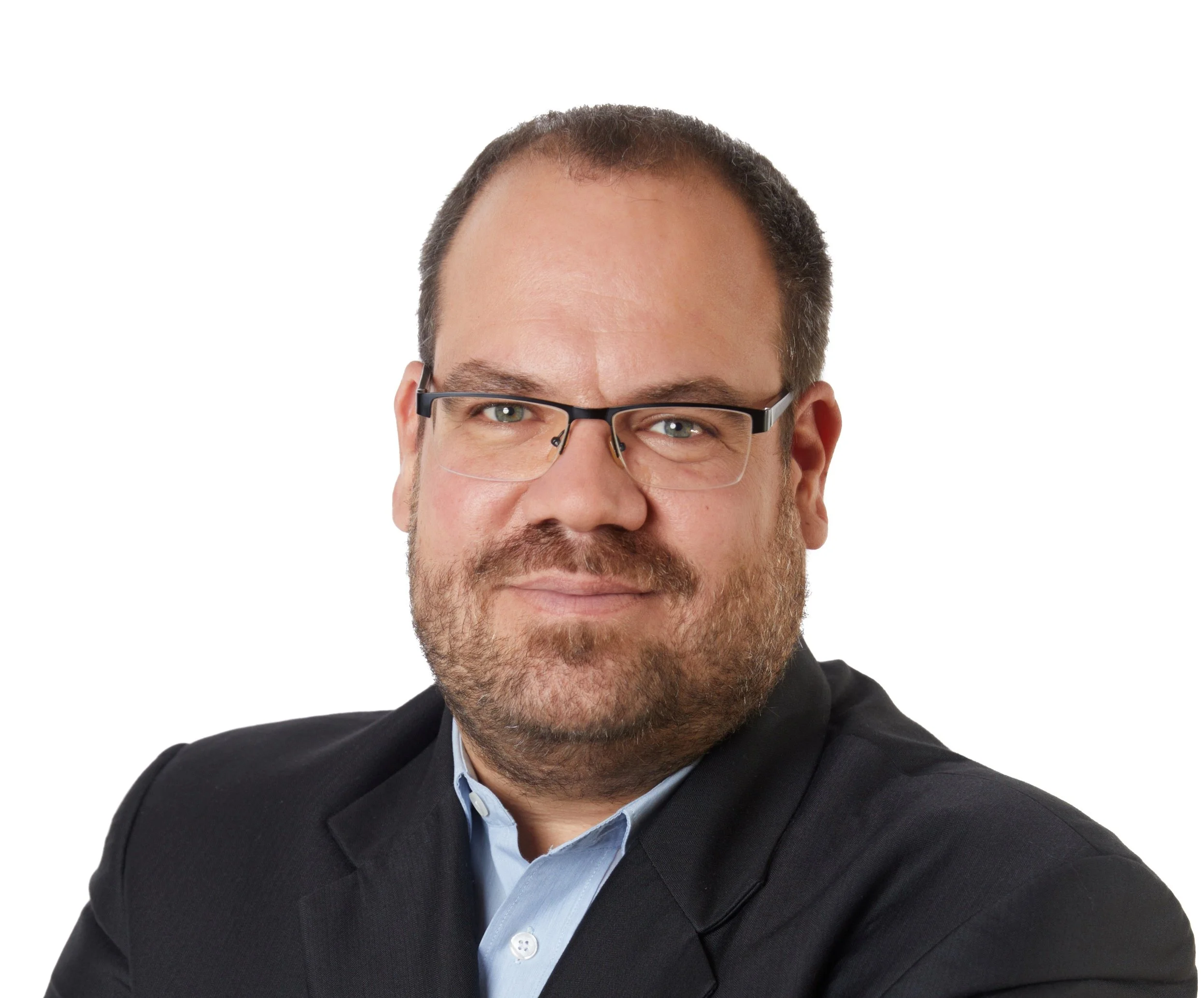
György Barta, Pharm.D. is the Clinical Operations Director and Managing partner of Research Professionals CRO. He graduated as a pharmacist in Hungary. He has 20+ years clinical operations experience in both CRO and pharma environments; gradually developed from Clinical Research Associate through local/regional project manager to a full-service global study manager, managing Phase II-III. global clinical trials. In his current role György is responsible for the operational oversight of the clinical study programs run by Research Professionals for their pharma, biotech, and medical device clients and oversight of decentralized clinical trial activities of RP’s DCT division (including home care research nursing).
György Barta, Pharm.D. is the Clinical Operations Director and Managing partner of Research Professionals CRO. He graduated as a pharmacist in Hungary. He has 20+ years clinical operations experience in both CRO and pharma environments; gradually developed from Clinical Research Associate through local/regional project manager to a full-service global study manager, managing Phase II-III. global clinical trials. In his current role György is responsible for the operational oversight of the clinical study programs run by Research Professionals for their pharma, biotech, and medical device clients and oversight of decentralized clinical trial activities of RP’s DCT division (including home care research nursing).
Music from #Uppbeat (free for Creators!):
https://uppbeat.io/t/infraction/infrared
License code: BSYP4BNSKRNVJJ8F
Image Credit: © Thaut Images - stock.adobe.com