
Orchestrating Decentralized Biomanufacturing
Scaling point-of-care and modular manufacturing requires companies to move beyond traditional paper-based reviews and into real-time digital execution with embedded quality control.
Highly personalized therapies, such as cell and gene therapies, are increasingly in demand as a result of their efficacy in treating many rare and complex conditions that have previously been considered untreatable. However, for many of these therapies, standard manufacturing practices are not fit for purpose, leading to a need for alternative approaches.
Redefining Scale
“Cell and gene therapies are one of the clearest reasons why the industry is looking at more decentralized manufacturing. Many of these treatments are highly personalized, and some need to be manufactured and delivered to patients very quickly,” reveals David Mix, Programme Director, Act for Hope — a collaborative initiative focused on accelerating growth in the cell and gene therapy (CGT) industry.
Alexander Seyf, Co-Founder and CEO of Autolomous, and Co-Founder of Act for Hope, adds that CGTs have clearly shown the limitations of the conventional scale-up manufacturing model. “In autologous cell therapy, we are not manufacturing thousands of interchangeable units from a single batch; every patient can represent an individual manufacturing journey, with their own starting material, chain of identity, chain of custody, manufacturing record, and clinical schedule,” he says.
“This is becoming a much broader advanced-therapies challenge,” Seyf continues. “Individualized messenger RNA (mRNA) therapies, cancer vaccines, viral-vector processes, short shelf-life biologics, and other next-gen modalities increasingly require flexible, digitally connected manufacturing rather than a small number of conventional high-volume factories.”
A key difference for decentralized manufacturing is the definition of scale, Seyf explains. “Instead of making a bigger batch, companies are often scaling by replicating the same process across more manufacturing units,” he says.
While there are certainly advantages to being able to manufacture in smaller units at the point of care, such as accessibility and reduced transport time, there are also new challenges to overcome, Mix remarks. “Instead of managing quality at one central site, organizations need to ensure the same standards are being met across many different locations,” he specifies.
“The quality challenge is therefore proving equivalence,” asserts Seyf. “You need consistency of process execution, equipment state, materials, operator qualification, environmental conditions, testing, and digital records across every node. That makes standardization and digital orchestration central to the manufacturing strategy, not support infrastructure added afterwards.”
Navigating Regulatory Divergence
While decentralized manufacturing has been recognized as an important approach by major regulatory bodies around the world (1), only the UK’s agency — the MHRA — has published a dedicated regulatory framework for drugs manufactured at the point-of-care (2). At the time of writing, neither FDA, in the U.S., nor EMA, in the European Union, have published specific guidelines for decentralized manufacturing, although both are adapting existing regulatory frameworks to recognize decentralized models (3,4).
Despite there being only one published dedicated regulatory framework, all regulatory agencies are aligned on their underlying objective, Seyf specifies. “Regulators do not want decentralization to lower the standards applied to safety, quality, or efficacy,” he says.
The regulatory divergences are seen in how the distributed network is represented and supervised, Seyf confirms. “The UK has created a specific legal architecture centred on a Control Site and Decentralised Manufacturing Master File,” he says. “FDA is developing its model through FRAME and has now proposed a central quality hub with multiple equivalent distributed manufacturing units. Europe has an established ATMP-specific GMP framework, including requirements around qualified-person certification and release, but it does not yet have the same dedicated decentralised manufacturing architecture.”
These variances are significant for global drug developers, Seyf continues. “Software and manufacturing platforms are inherently scalable across borders, but regulatory licences and quality structures remain jurisdictional,” he reveals.
“Greater international alignment would help companies avoid building different systems for every market,” concurs Mix. “Common expectations around quality, data, oversight and how different manufacturing sites are compared would make it easier to expand decentralised manufacturing globally.”
However, that is not to say that regulators need to have identical legislation, Seyf remarks, highlighting that the important factor is for there to be commonality of regulatory expectations. “A decentralized model reaches its full potential only when a manufacturer can build one robust global manufacturing and digital-control architecture rather than repeatedly redesigning that architecture market by market,” he says.
Solving Network Governance
According to Mix, regulatory acknowledgement that decentralized manufacturing requires a different approach to traditional manufacturing is definitely a positive. “The challenge is that these models are still relatively new, so both regulators and developers are learning how they will work in practice,” he says. “Questions remain around how multiple sites are inspected, how consistency is maintained, and how changes are managed across a network.”
For Seyf the alignment of the regulatory direction with technology is encouraging. “The UK’s approach is especially important because it recognizes decentralized manufacturing as a network, which is much close to how a modern digital manufacturing architecture works — you can have distributed execution while maintaining central governance and visibility,” he explains.
FDA is moving in a similar direction through its FRAME program, Seyf continues. “Distributed manufacturing and point-of-care manufacturing are formal priorities, and, in July 2026, FDA proposed a registration model under which equivalent distributed manufacturing units governed through a central quality hub could, if the rule is finalized, operate as a single registered establishment,” he says.
“Those are important advances, but regulation alone does not solve the operational challenge,” Seyf asserts. “The manufacturer still needs to provide evidence that every spoke remains in control. Regulators need confidence that a distributed network can be inspected, monitored and changed without losing traceability.”
Incorporating Quality into Execution
Traditionally, quality assurance has relied upon a retrospective review of drug products, Seyf comments. “Manufacturing happens, the record is assembled, quality reviews it, discrepancies are investigated, and ultimately the batch is released,” he says. “That model is already inefficient for advanced therapies and becomes increasingly difficult when manufacturing is distributed across many sites.”
A future model should incorporate quality assurance into the execution of the manufacturing process to reduce potential errors, enforce procedural sequences, and maintain continuous oversight of quality, Seyf notes. “That does not mean removing the qualified person or quality manager from the process, it means giving them better information and allowing their expertise to focus on deviations and risk rather than transcription and document reconciliation,” he states.
“Quality oversight needs to work across the whole manufacturing network, rather than looking at each site in isolation,” confirms Mix. “Central teams need clear and timely information from every manufacturing location in the network. Digital systems can help by making it easier to see what has happened during manufacturing and whether anything needs attention.”
Digital and Cybersecurity Integrity
When manufacturing is spread across multiple locations, reliability of digital systems becomes imperative, Mix specifies. “Companies need to know that the data they are receiving is accurate, secure and coming from the right source. They also need appropriate controls around who can access or change information,” he says.
“Once manufacturing becomes distributed, the digital platform effectively becomes part of the GMP control strategy,” Seyf confirms. “Every transaction needs to be attributable and traceable. Companies need validated electronic records, role-based access, secure authentication, audit trails, electronic signatures where applicable, controlled system configuration and validated interfaces between manufacturing equipment and supervisory software.”
The context of the data is also important, Seyf remarks. “It is not enough to know that a temperature value was captured. You need to know which patient or batch it belonged to, which process step was running, which instrument produced it, whether that instrument was calibrated, who was responsible for the operation and whether the value generated an exception,” he explains.
“Cybersecurity is inseparable from this because a distributed manufacturing network expands the potential attack surface,” Seyf warns. “Strong identity management, encryption, network segregation, resilient backups, monitoring and incident-management procedures are therefore part of protecting product quality as well as protecting information.”
Additionally, with regards to cybersecurity, there is an imperative to have consistency across the network because if there is a problem in one part, other sites can be affected, Mix confirms. “Broader compatibility issues must be addressed and require ongoing feedback to improve functionality,” he adds.
“If different organizations use completely different systems and data formats, it becomes difficult to share information or learn from each other,” Mix continues. “Greater consistency in how information is recorded will make collaboration much easier.”
A Standardized Infrastructure
“The key question is whether decentralized manufacturing can help more patients access advanced therapies,” Mix asserts. “There is real potential. Bringing manufacturing closer to patients could reduce some logistical and capacity problems that currently make these therapies difficult to deliver at scale.”
However, Mix points out that simply moving manufacturing to multiple locations is not the solution. “The underlying processes still need to be consistent, reliable, and easy to reproduce,” he states.
“I think there is a risk that the industry treats decentralized manufacturing as a facilities strategy, it is much more than that,” stresses Seyf. “A genuine decentralized model requires the automation layer, the digital execution layer, the quality system, and the data architecture to operate as one environment. Local manufacturing needs to be reproducible while central teams retain the visibility and control required to demonstrate GMP compliance.”
Seyf highlights the value of lessons that have been learned through personalized therapies, such as CGT, which have required industry to look at chain of identity, complex material flows, batch sizes, turnaround time, and distributed clinical networks much earlier on in the development lifecycle.
“The opportunity is to take what this industry has learned about orchestrating extremely complex personalized therapies and make that infrastructure reusable,” Seyf concludes. “If we get this right, decentralization is not simply a way of moving manufacturing closer to the patient. It is an opportunity to create a different manufacturing architecture: distributed physically, but standardized, visible, and controlled digitally.”
References
von der Leyen, H.; Delgado, J.; Mazous, C.; Schmitt, M.; Caplan, V. Implementation of a Quality Management System for Decentralized Manufacturing of Cell and Gene Therapy Products — Technical and Regulatory Considerations. Front. Med. 2025, 12, 1591751.
MHRA. Decentralised Manufacturing Hub. www.gov.uk, March 19, 2025.
FDA. Considerations for the Development of Chimeric Antigen Receptor (CAR) T Cell Products. Guidance Document, January 2024.
European Commission. Guidelines on Good Manufacturing Practice Specific to Advanced Therapy Medicinal Products. EudraLex Volume 4, Nov. 22, 2017.
About the Contributors

David Mix currently serves as the Programme Director for Act for Hope — a collaborative initiative focused on accelerating growth in the cell and gene therapy (CGT) industry.
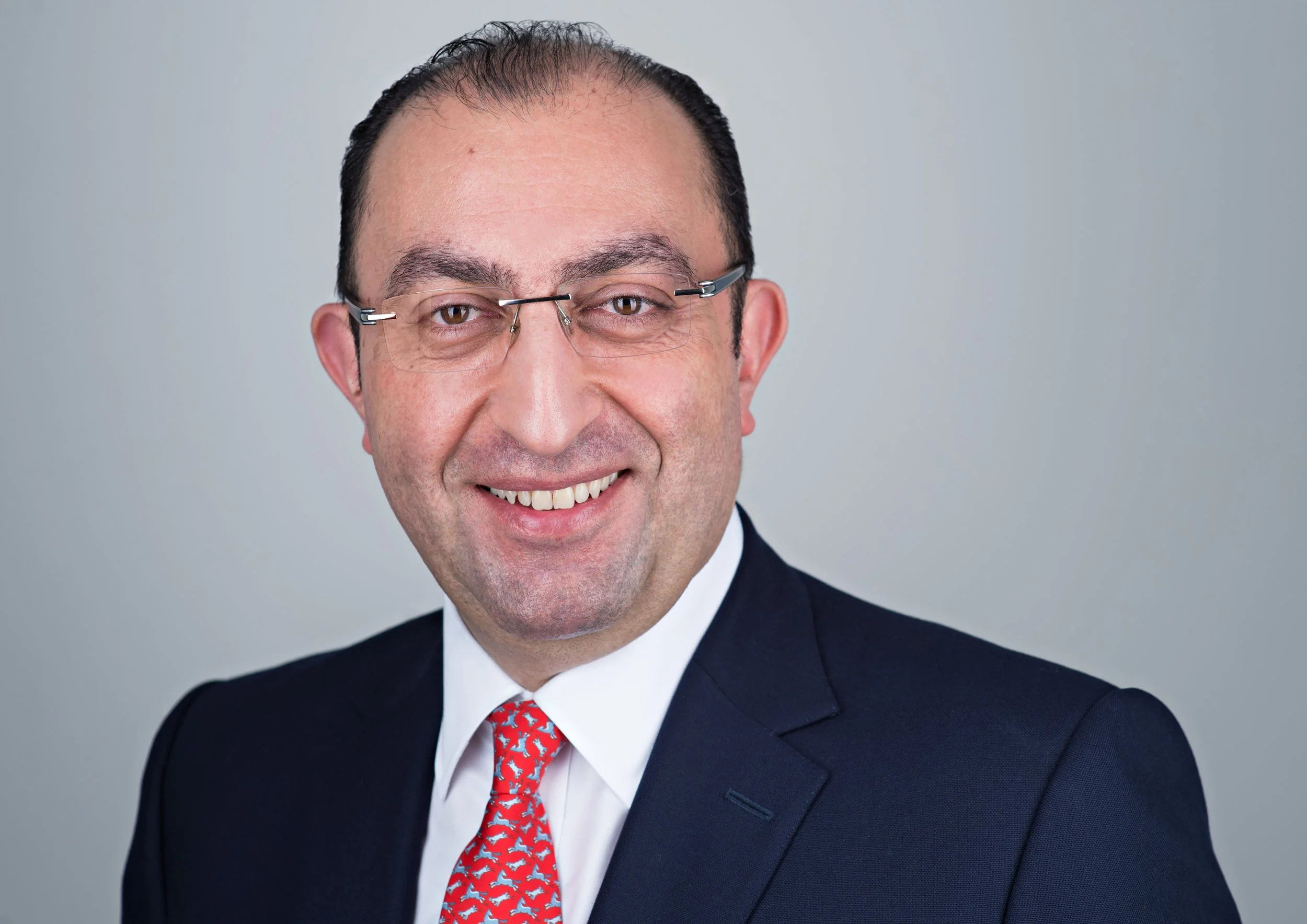
Alexander Seyf is the Co-Founder and CEO of Autolomous, and the Co-Founder of Act for Hope. Alexander is a seasoned entrepreneur, business leader, and management consultant with strong business acumen and strategic thinking, combined with an innovative mind to challenge existing thinking. He has over 30 years of consistent progression, building, and reinventing businesses and working with market-leading firms and clients.
Image Credit: © Pugun & Photo Studio - stock.adobe.com