
Realizing the Reality of Oral Biologics
Driven by the rise of primary-care biologics and value-based healthcare, oral peptides and proteins are challenging traditional injectable paradigms, reveals Giuseppe De Franza from Adare Pharma Solutions.
Delivering biologics orally is undoubtedly clinically appealing but as a result of various formulation and development obstacles has, until recently, been limited in commercial viability. However, various macro shifts within industry are leading to oral delivery of biologics becoming more of a clinical necessity. To understand how developers are navigating the complex trade-offs between bioavailability, gastrointestinal safety, and manufacturing scalability, The Pharma Navigator chatted with Giuseppe De Franza, Director of Pharmaceutical Development at Adare Pharma Solutions.
Commercial Feasibility
TPN: Oral delivery has long been called the ‘Holy Grail’ of biologics, yet standard injectables remain the default. What macro shifts are making oral biologics a clinical necessity rather than just a commercial preference?
De Franza: Three shifts: biologics have moved into chronic, primary-care indications where dosing continues for years and adherence to injectables measurably declines; payers now evaluate total cost of care, which brings cold chain, devices, and administration support into view alongside drug price; and oral peptides have demonstrated the pathway works commercially.
Once a route is proven at scale, the question changes from whether oral delivery is feasible to which molecules justify the development investment. That is a materially different conversation than the one the industry was having 10 years ago.
Therapeutic Focus
TPN: When we map out the market value, which specific therapeutic areas or disease indications stand to benefit most from an oral biologic format, and where does the traditional injectable model still make the most clinical sense?
De Franza: Chronic, high-volume, self-administered categories create the most value: cardiometabolic disease, obesity, hormone replacement. Daily dosing is already the ‘norm’ and the populations are large enough to absorb a bioavailability penalty. Gastrointestinal (GI) indications are a separate and underrated case, because a locally acting protein does not need to cross the epithelium at all.
Injectables remain the right choice for oncology, acute care, and large antibodies, where dose precision matters, administration is supervised, and dosing intervals run to weeks or months.
Durability of Structural Strategies
TPN: The human GI tract is designed to destroy large proteins and peptides. From a mechanistic standpoint, what are the most robust strategies currently being deployed to protect the structural integrity of the molecule without causing systemic GI toxicity?
De Franza: The durable strategies are structural rather than pharmacological. Enteric polymers that hold below gastric pH and release quickly in the duodenum remain the foundation, and multiparticulate subdivision improves on a single coated unit by distributing the payload across many independently coated bodies, which smooths gastric emptying and limits the consequence of any single failure.
Adare’s enzyme work runs on that logic. Lipase is irreversibly denatured below about pH 4, so the coating has to be genuinely acid-tight while still releasing on schedule downstream. Protease inhibitors perform acutely but raise questions over years of dosing.
Building the Evidence Base
TPN: Many enabling technologies rely on transient permeation enhancers to shepherd large molecules across the intestinal epithelium. How does the industry balance the need for increased bioavailability with the critical requirement to keep the intestinal barrier safe from opportunistic pathogens?
De Franza: The field is still building that evidence base. Enhancers such as caprate and salcaprozate open the barrier transiently and locally, and both now have chronic clinical exposure behind them. What is less settled is how to demonstrate reversibility rigorously across years of daily dosing rather than in single-dose histology.
The endpoints that matter are functional: permeability markers, endotoxin, inflammatory signals under repeat dosing, in populations whose barrier may already be compromised. Designs that concentrate the enhancer with the drug in a small region are more defensible than those dosing the whole intestine.
Promising Innovations
TPN: Beyond traditional chemical permeation enhancers and enteric coatings, what distinct scientific innovations show the most objective promise for clinical translation?
De Franza: Device-based capsules have produced the most convincing pharmacokinetic data, largely because they bypass the barrier rather than negotiating with it. Their obstacle is not biology but manufacturing. A swallowable device is a combination product with a cost and quality profile unlike any tablet, and chronic repeat use raises questions a single dose does not answer.
Receptor-mediated transcytosis, using existing transport pathways such as FcRn or B12, is less clinically proven but scales on conventional equipment. On a 10-year view, the second category is likelier to become routine.
De-Risking Tools
TPN: A major bottleneck in oral biologic development is that preclinical animal models rarely replicate human GI physiology accurately. What advances are helping developers to de-risk their formulations before entering the clinic?
De Franza: The most useful advances are the least glamorous. Work performed on human tissue using human intestinal organoids and Ussing chamber provides permeability data that is not achievable with rodent models. Dynamic GI simulators let you watch a coating fail under realistic pH and motility before it fails in a clinic.
Physiologically based models with regional absorption compartments are now routinely used to interpret that data and are increasingly accepted in submissions. The caveat is that none of it predicts absolute bioavailability. These tools rank-order formulations and expose failure modes, which is what de-risking actually means.
Already Competing
TPN: If you look at the current trajectory of the industry, what is a realistic timeline for when we will see oral biologics routinely competing with standard injectable blockbusters on a large scale? What must happen structurally in the CDMO and biotech landscape to make that a reality?
De Franza: Oral peptides are already competing, and that will broaden over the next five to seven years. Larger proteins and antibodies will remain injectable for most of the next decade. The structural gap is organizational. Biologics manufacturers understand protein handling but not coating, granulation, or multiparticulate processing.
Oral solid dose manufacturers have the reverse problem. Few facilities hold both, along with analytics that measure retained bioactivity rather than assay alone. Closing that gap and getting biotechs to commit to formulation earlier than Phase II matters more than any single enabling technology.
About the Interviewee
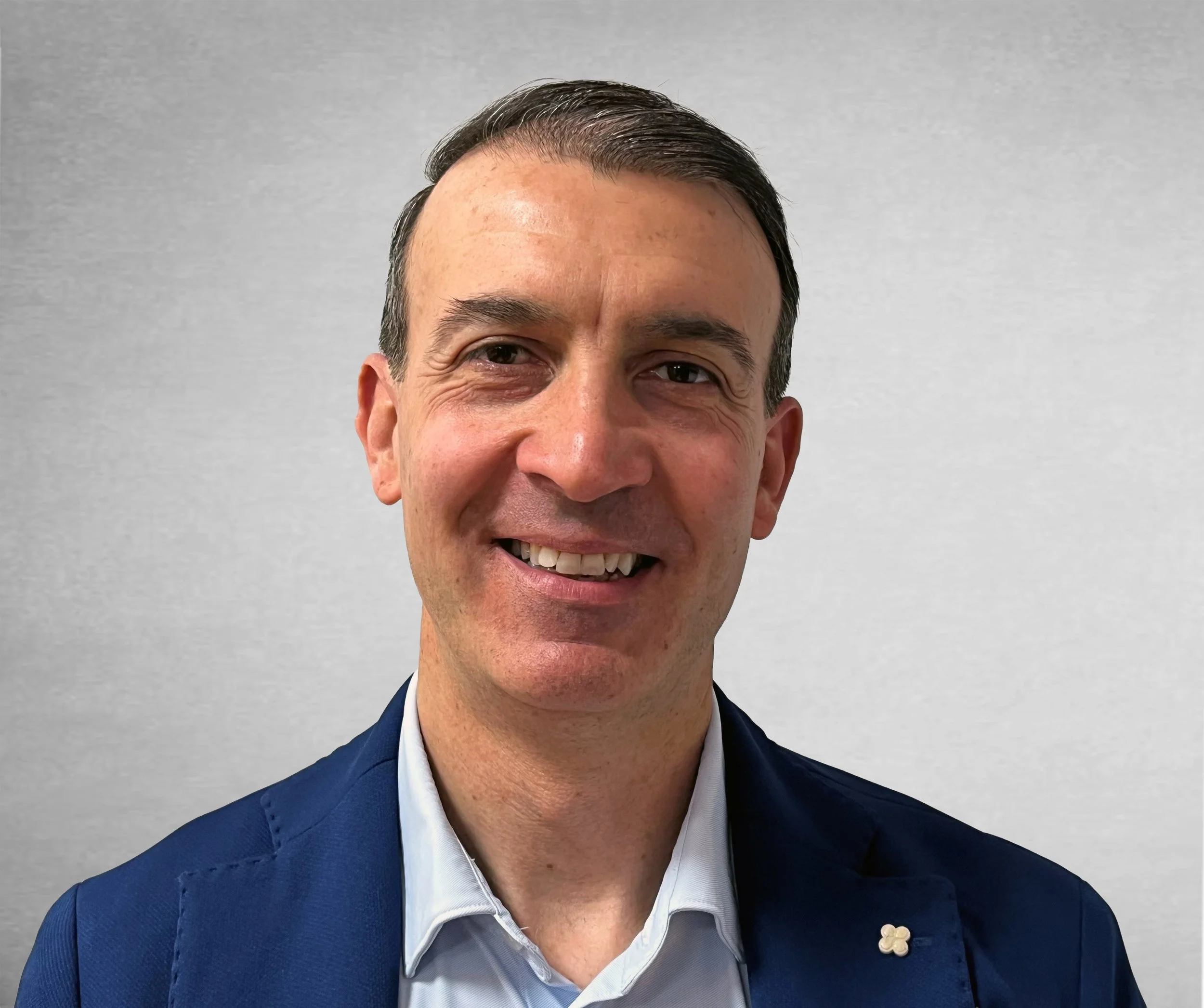
Giuseppe De Franza is the Director of Pharmaceutical Development at Adare Pharma Solutions. He leads all formulation activities within the Italian pharmaceutical development team. With nearly 30 years of experience in the pharmaceutical industry, Giuseppe has held a range of roles at Adare with increasing responsibility across manufacturing, technology transfer, industrialization, and continuous improvement.
A certified Lean Six Sigma Black Belt, Giuseppe brings over a decade of hands-on experience in applying Lean methodologies to drive process optimization, enhance productivity and improve quality. His work is underpinned by deep expertise in pharmaceutical technologies and industrial processes.
Giuseppe holds a bachelor’s degree in biology from the University of Milan, Italy.
Image Credit: © Shuo - stock.adobe.com